About
Pull up a chair.
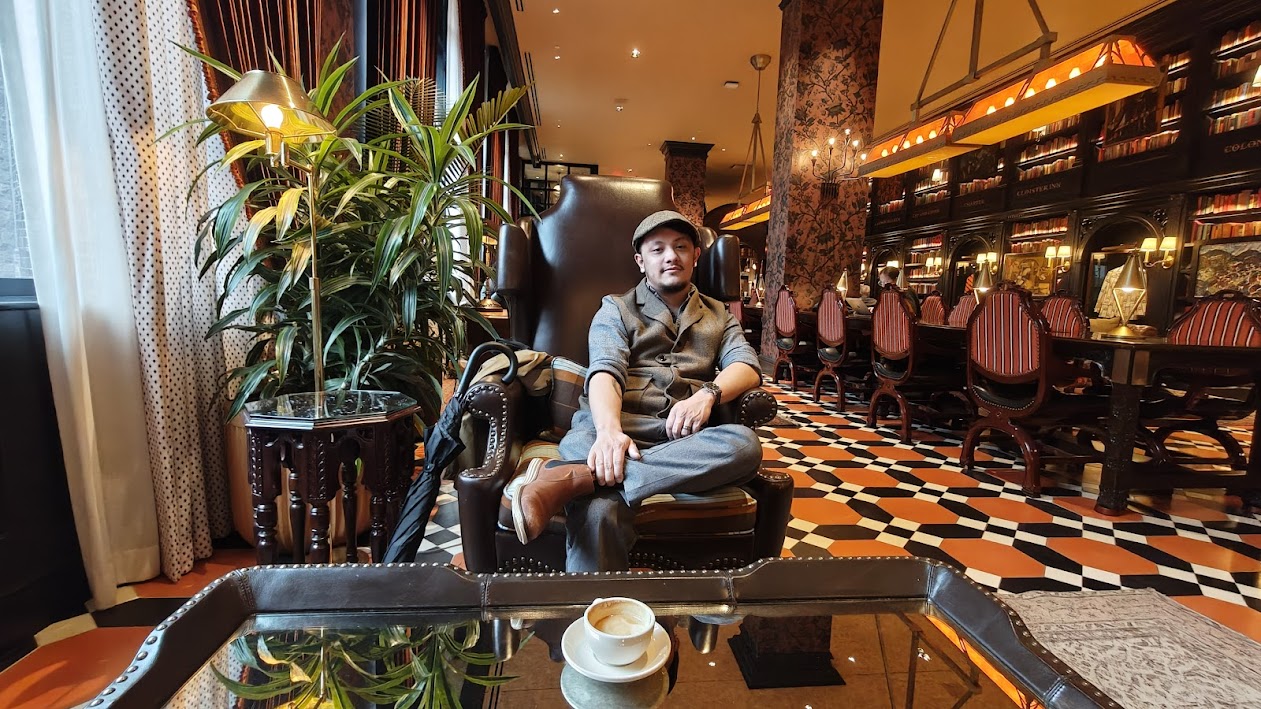
Hey! Hey! I’m CK.
By day, I help enterprise customers navigate complex AI platforms in the contact center space. By night, I’m reading Seneca, building self-hosted infrastructure on Linux, learning some new skill, and 3D printing things for the apartment. On Sunday, I’m probably in a pew somewhere trying to figure out how faith, philosophy, and an 800-year-old apprenticeship model all point in the same direction.
I call this the Renaissance Craftsman approach. Not because I’m trying to be Leonardo da Vinci (I definitely couldn’t be). But because I genuinely believe that the best ideas come from connecting things that aren’t supposed to be connected. A Victorian knowledge practice informs how you build a digital second brain. A guild system turns out to work better for some brains than any modern productivity framework. Henry Chapman Mercer built an entire castle by hand to preserve craft traditions he saw disappearing. That impulse, to protect what matters by building something with your hands, is the same one driving this whole project.
I’m not a productivity influencer. I’m not optimizing my morning routine. I’m a first-generation Filipino-American who got obsessed with too many things, spent years thinking that was a problem, and eventually realized it was the whole point.
I document this journey across my YouTube channel, a growing collection of 350+ books across 50+ domains (collected, not all read), and a personal knowledge system called the Scriptorium. If any of that sounds interesting, you’re in the right place.
"Craftsmanship names an enduring, basic human impulse, the desire to do a job well for its own sake."
Richard Sennett, The CraftsmanWhat I’m Into Right Now
The honest snapshot. This changes all the time, which is kind of the point.
- 3D printing everything. The Bambu P2S is running almost daily. Magnetic wall mounts, cable organizers, custom brackets for the apartment. If I can model it in FreeCAD, I’m printing it. Parametric modeling is the part I didn’t expect to love this much. The bridge between digital and physical is addictive.
- Getting into electronics next. Arduino and soldering are up next in the skill progression. The maker trilogy: fabricate, electrify, fuse. 3D printing is the first leg. Electronics is the second. Eventually they converge.
- Filming again. The YouTube channel went quiet for a while. Now I’m shooting philosophy and skill videos, documenting what I’ve been learning. Comeback season.
- Taking every AI course I can find. Anthropic Academy, Google AI. Expanding from conversational usage into API, automation, and agentic workflows. This is my day job and my obsession and they happen to overlap.
- Reading too many books at once. As always. Four at the moment. See below.
The Scriptorium
The Scriptorium is my personal knowledge system. It’s not a productivity hack. It’s an architecture for how I actually think: analog exploration first, AI collaboration second, digital archive third. Each layer serves a different cognitive function.
Layer I: Scholar’s Manuscript
Analog notebooks. Kokuyo Systemic cover with three Midori MD inserts: a weekly scheduler, a blank thinking canvas for visual frameworks, and a dotted commonplace book. I’ve tried every digital task system and note-taking app. The hand thinks differently than the keyboard. Some ideas only come out on paper.
Layer II: Scholar’s Brain
AI collaboration as cognitive extension. Claude for deep synthesis, long-form thinking, and decision-making. Gemini for real-time research and creative direction. Two tools, different strengths, neither one the author. The work is mine. The tools accelerate it.
Layer III: Scholar’s Web
An Obsidian vault with a nine-space architecture and 500+ notes. The permanent record of everything that survives the other two layers. Local-first, markdown-based, platform-independent. No vendor lock-in, no subscription, no algorithm deciding what I see. I own my thinking.
Latest Video
In my most recent video, I work to help people get over setting goals that fail and instead work on finding systems to achieve and accomplish on THEIR terms.